Roll-Up Banner Uses Explained for South African Businesses
Introduction
Roll-up banners are one of the most common display tools used by South African businesses, especially when a brand needs visibility without permanent signage. You see them at exhibitions, conferences, product launches, retail entrances, and even reception areas. Their popularity is easy to understand: they are portable, fast to set up, and capable of delivering a clear message in a compact footprint.
However, roll-up banners are often treated as a “default” choice rather than a strategic one. Businesses print them because they have seen other companies using them, not because they have evaluated whether a roll-up banner is the best solution for their specific environment and message. That is where results can fall short. A banner that is too text-heavy, poorly structured, or used in the wrong setting can be easy to ignore, even if it looks professional.
This guide explains practical roll-up banner uses, where they perform best, and how to get better outcomes through smarter design and print choices.
What Is a Roll-Up Banner
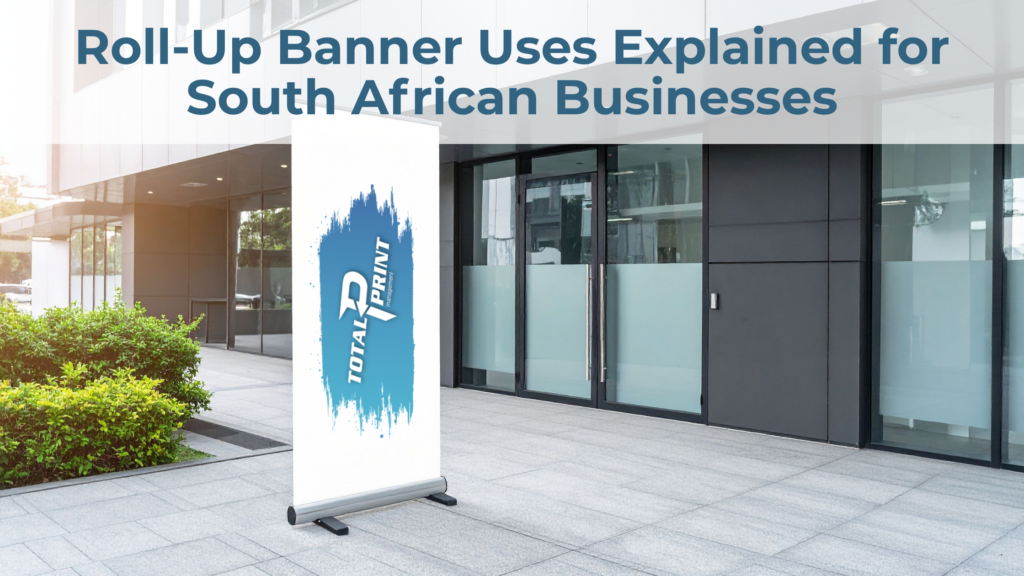
A roll-up banner is a retractable banner system made up of three key parts: the printed graphic, the aluminium base that houses the rolled graphic, and a support pole that holds the banner upright. When in use, the banner is pulled up and attached to the pole. When you are finished, the banner retracts back into the base for storage.
This design makes roll-up banners ideal for situations where branding needs to move with the business. Unlike wall signage or fixed boards, roll-up banners can be transported, reused, and stored easily. That flexibility is one reason they remain popular for temporary marketing and event-based communication.
Roll-Up Banner Uses at Exhibitions and Trade Shows
One of the strongest roll-up banner uses is at exhibitions and trade shows. In these environments, businesses compete for attention in crowded venues where attendees are moving quickly. A roll-up banner can help define a stand space, reinforce branding, and make it clear what the business does within a few seconds.
Roll-up banners work particularly well as:
- Stand “bookends” at the front corners of a space
- Supporting messaging next to a counter or table
- Directional signage pointing visitors to demonstrations or sign-ups
For exhibition use, messaging should be structured for fast scanning. A clear headline, a short supporting line, and a strong visual are usually more effective than multiple paragraphs of text. If the banner is meant to drive conversation, it should leave room for staff to explain details rather than trying to say everything.
Businesses that attend multiple events often pair roll-up banners with other event assets such as backdrops, flags, or branded table covers, which fall under Event Branding. Keeping designs consistent across these items makes the stand feel cohesive and more credible.
Roll-Up Banner Uses in Retail and In-Store Promotion
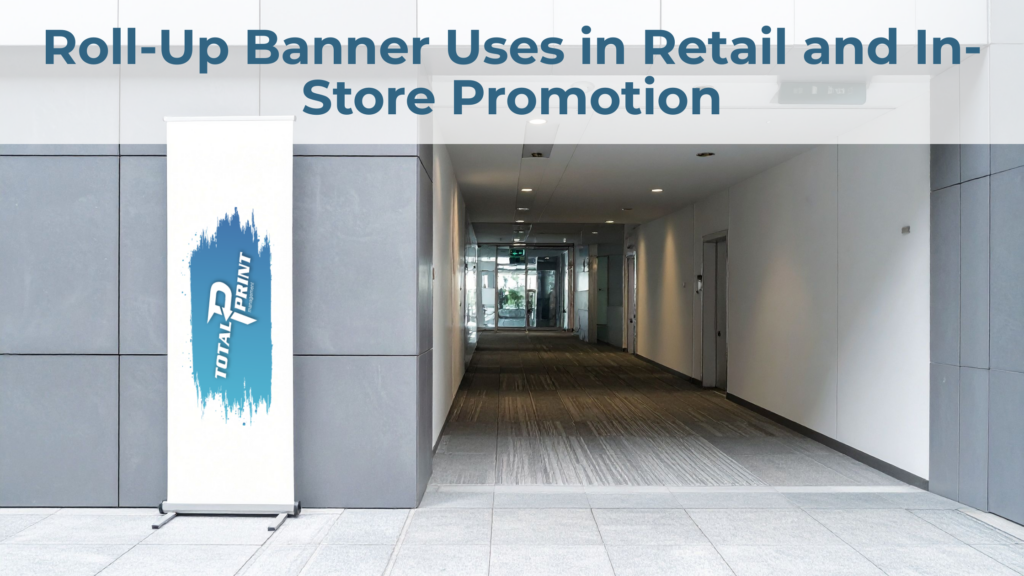
Retail spaces benefit from roll-up banners because they deliver strong vertical visibility without using valuable shelf space. They can highlight promotions, point customers to certain departments, or support seasonal campaigns. In South Africa, roll-up banners are frequently used in shopping centres, showrooms, and pop-up retail setups because they can be set up quickly and moved as store layouts change.
A roll-up banner in retail should focus on one message at a time. Examples include:
- “New range now available” messaging near entrances
- A limited-time promotion near a featured display
- A membership or loyalty programme sign-up prompt at checkout
Retailers often combine banners with shorter, mass-distribution print such as flyers or handouts, especially when promotions need to reach people outside the store. In that case, it can help to align the banner visuals with supporting print from Flyers, Leaflets & Posters so the campaign looks unified across different touchpoints.
Roll-Up Banner Uses in Corporate Spaces
Roll-up banners are also common in corporate environments, where they can communicate messaging without permanent fixtures. Reception areas, training rooms, and boardrooms often use banners for:
- Service summaries and brand positioning
- Company values or internal campaigns
- Wayfinding for events, sign-in points, or meeting rooms
In corporate spaces, roll-up banners tend to work best when they are minimal and brand-aligned. Excessive promotional wording can feel out of place in professional settings, while clear messaging and clean design can reinforce credibility.
Corporate banners are often used alongside printed collateral such as folders, brochures, or branded stationery for meetings and presentations. Where that applies, it is worth ensuring consistency across materials produced under Corporate Printing Services.
Roll-Up Banner Uses for Promotions and Community Events
South African businesses and organisations frequently participate in community events, activations, and outreach programmes, from school events to sporting days and local markets. Roll-up banners are useful in these settings because they provide instant brand visibility and can be reused across multiple dates.
For promotions, the goal is usually to be remembered. That means the banner should prioritise the business name, a short description of what you offer, and one clear call-to-action such as “Visit us” or “Ask about our packages.” If contact details are included, they should be limited to the most important channel, such as a phone number or website, not every available platform.
Design Guidelines That Improve Performance
Many roll-up banners fail not because the format is wrong, but because the design does not match how people actually view banners. Most people do not stand close and read them like a brochure. They glance at them while moving.
Effective roll-up banner design usually includes:
- A headline readable from several metres away
- A short supporting line that clarifies the offer
- One main image or graphic that supports the message
- Strong contrast for readability in different lighting
Avoid long bullet lists or dense blocks of text. If the information is detailed, a brochure or handout is a better tool, and the banner should simply encourage the next step, such as visiting a table or speaking to staff.
Print and Durability Considerations
Because roll-up banners are used repeatedly, durability matters. The printed surface should resist scuffing, and the base mechanism should retract smoothly to prevent damage over time. Poor-quality banners can develop curling edges or faded visuals, which immediately reduces professional appearance.
If banners will be transported often, it is worth thinking about how they will be packed, stored, and handled between events. Even a strong design can look poor if it is creased, scratched, or stored incorrectly.
When a Roll-Up Banner Is Not the Best Option
Roll-up banners are not ideal for every environment. Outdoors, wind can make them unstable unless they are sheltered. For permanent signage needs, fixed boards or wall-mounted signage generally perform better. If the environment is very busy and the message requires multiple steps or details, a banner may not hold attention long enough.
Choosing the right format comes down to viewing distance, time available for reading, and whether the message is promotional or informational.
For a general overview of banner formats in advertising, see Banner advertising.
Conclusion
Roll-up banner uses remain popular because they solve a real business need: portable visibility with quick setup. They work particularly well at exhibitions, in retail environments, and in corporate spaces where branding must be flexible. The key is using them strategically, with concise messaging and design that suits how banners are viewed in real settings.
When roll-up banners are paired with consistent event materials and supporting print, they become more than a display item. They become part of a coherent brand experience that customers can recognise and trust.